opensource.google.com

Menu
Showing posts with label GSoC Meetups. Show all posts

Googlers on the road: FOSDEM 2018

Monday, January 22, 2018

The Google Open Source team is currently enjoying summer weather in Sydney at Linux.conf.au, but soon we return to winter weather and head to Brussels for FOSDEM 2018. FOSDEM is a special event, famous for being non-commercial, volunteer-organized, and free to attend. It’s also huge, attracting more than 5,000 attendees.

FOSDEM logo licensed CC BY 2.0 SE.
This year FOSDEM is particularly special as it falls on top of the 20th anniversary of the open source movement and its steward, the Open Source Initiative. (In case you’re wondering, this September will mark the 35th anniversary of the free software movement.) We’re looking forward to celebrating the occasion!

You’ll find us in the hallways, at satellite events, and at our table in the stands area. You’ll also find some Googlers in the conference schedule, as well as folks sharing their experience of the most recent Google Summer of Code and Google Code-in.

If you’d like to say hello or chat, swing by our table in Building K. The highlight of our trip is meeting hundreds of the thousands of students and mentors who have participated in our programs!

Below are the Googlers who will be giving presentations:

Saturday, February 3rd
12:30pm  Google’s approach to distributed systems observability for Go by JBD (also at 2:30pm)
3:05pm    Testing and Validating distributed systems by Holden Karau

Sunday, February 4th
10:20am  Regular Expression Derivatives in Python by Michael Paddon
11:30am  Advocating For FOSS Inside Companies a panel including Max Sills
3:00pm    Your Build in a Datacenter by Jakob Buchgraber
4:00pm    Accelerating Big Data Outside of the JVM by Holden Karau

Hope to see you there!

By Josh Simmons, Google Open Source

Googlers on the road: Linux.conf.au 2018

Monday, January 15, 2018

It’s summer in Sydney and Linux.conf.au (LCA) 2018 is just a week away. LCA, an annual event that attracts people from all over the globe, including Googlers, runs January 22nd to 26th.

LCA is a cornerstone of the free and open source software (FOSS) community. It’s volunteer-run, administered by Linux Australia, and has been running since 1999. Despite its name, the conference program covers all things FOSS. The event is five days long and includes two days of miniconfs that make the program even more interesting.

The Google Open Source team is escaping “wintery” Northern California and will be hosting a Birds of a Feather (BoF) session and co-hosting an event with GDG Sydney, both focused on our student programs.

A few Googlers ended up with sessions in the program and one is running a miniconf:

Tuesday, January 23rd
All day     Create hardware with FPGAs, Linux and Python Miniconf hosted by Tim Ansell (sold out)
11:40am  Learn by Contributing to Open Source by Josh Simmons
5:15pm    Assembling a balsa-wood Raspberry Pi case by Josh Deprez
5:45pm    Streaming Machine Learning with Apache Spark Meetup by Holden Karau

Wednesday, January 24th
1:40pm    Dealing with Contributor Overload by Holden Karau
3:50pm    Securing the Linux boot process by Matthew Garrett

Thursday, January 25th
12:25pm  Google Summer of Code and Google Code-in Birds of a Feather session
6:00pm    Google Summer of Code and Google Code-in Meetup with GDG Sydney

Friday, January 26th
11:40am  The State of Kernel Self-Protection by Kees Cook
1:40pm    QUIC: Replacing TCP for the Web by Jana Iyengar
2:35pm    The Web Is Dead! Long Live The Web! by Sam Thorogood

Not able to make the conference? They’ll be posting session recordings to YouTube afterwards, thanks in part to students who have worked on TimVideos, a suite of open source software and hardware for recording video, as part of Google Summer of Code.

Naturally, you will also find the Google Open Source team at other upcoming events including FOSDEM. We look forward to seeing you in 2018!

By Josh Simmons, Google Open Source

Saddle up and meet us in Texas for OSCON 2017

Wednesday, April 26, 2017

The Google Open Source team is getting ready to hit the road and join the open source panoply that is Open Source Convention (OSCON). This year the event runs May 8-11 in Austin, Texas and is preceded on May 6-7 by the free-to-attend Community Leadership Summit (CLS).
Program chairs at OSCON 2016, left to right:
Kelsey Hightower, Scott Hanselman, Rachel Roumeliotis.
Photo used with permission from O'Reilly Media.

You’ll find our team and many other Googlers throughout the week on the program schedule and in the expo hall at booth #401. We’ve got a full rundown of our schedule below, but you can swing by the expo hall anytime to discuss Google Cloud Platform, our open source outreach programs, the projects we’ve open-sourced including Kubernetes, TensorFlow, gRPC, and even our recently released open source documentation.

Of course, you’ll also find our very own Kelsey Hightower everywhere since he is serving as one of three OSCON program chairs for the second year in a row.

Are you a student, educator, project maintainer, community leader, past or present participant in Google Summer of Code or Google Code-in? Join us for lunch at the Google Summer of Code table in the conference lunch area on Wednesday afternoon. We’ll discuss our outreach programs which help open source communities grow while providing students with real world software development experience. We’ll be updating this blog post and tweeting with details closer to the date.

Without further ado, here’s our schedule of events:

Monday, May 8th (Tutorials)

Tuesday, May 9th (Tutorials)

Wednesday, May 10th (Sessions)
12:30pm Google Summer of Code and Google Code-in lunch

Thursday, May 11th (Sessions)

We look forward to seeing you deep in the heart of Texas at OSCON 2017!

By Josh Simmons, Google Open Source

Open source down under: Linux.conf.au 2017

Wednesday, December 28, 2016

It’s a new year and open source enthusiasts from around the globe are preparing to gather at the edge of the world for Linux.conf.au 2017. Among those preparing are Googlers, including some of us from the Open Source Programs Office.

This year Linux.conf.au is returning to Hobart, the riverside capital of Tasmania, home of Australia’s famous Tasmanian devils, running five days between January 16 and 20.
Circle_DevilTuz.png
Tuz, a Tasmanian devil sporting a penguin beak, is the Linux.conf.au mascot.
(Artwork by Tania Walker licensed under CC BY-SA.)
The conference, which began in 1999 and is community organized, is well equipped to explore the theme, "the Future of Open Source," which is reflected in the program schedule and miniconfs.

You’ll find Googlers speaking (listed below) as well as participating in the hallway track. Don’t miss our Birds of a Feather session if you’re a student, educator, project maintainer, or otherwise interested in talking about outreach and student programs like Google Summer of Code and Google Code-in.

Monday, January 16th
12:20pm The Sound of Silencing by Julien Goodwin
1:20pm   An Open Programming Environment Inspired by Programming Games by Josh Deprez

Tuesday, January 17th
All day    Community Leadership Summit X at LCA

Wednesday, January 18th
2:15pm   Community Building Beyond the Black Stump by Josh Simmons

Thursday, January 19th
4:35pm   Using Python for creating hardware to record FOSS conferences! by Tim Ansell

Friday, January 20th
1:20pm   Linux meets Kubernetes by Vishnu Kannan

Not able to make it to the conference? Keynotes and sessions will be livestreamed, and you can always find the session recordings online after the event.

We’ll see you there!

By Josh Simmons, Open Source Programs Office

Googlers on the road: OSCON 2016 in Austin

Monday, May 9, 2016

Developers and open source enthusiasts converge on Austin, Texas in just under two weeks for O’Reilly Media’s annual open source conference, OSCON, and the Community Leadership Summit (CLS) that precedes it. CLS runs May 14-15 at the Austin Convention Center followed by OSCON from May 16-19.

OSCON 2014 program chairs including Googler Sarah Novotny.
Photo licensed by O'Reilly Media under CC-BY-NC 2.0.

This year we have 10 Googlers hosting sessions covering topics including web development, machine learning, devops, astronomy and open source. A list of all of the talks hosted by Googlers alongside related events can be found below.

If you’re a student, educator, mentor, past or present participant in Google Summer of Code or Google Code-in, or just interested in learning more about the two programs, make sure to join us Monday evening for our Birds of a Feather session.

Have questions about Kubernetes, Google Summer of Code, open source at Google or just want to meet some Googlers? Stop by booth #307 in the Expo Hall.


Thursday, May 12th - GDG Austin
7:00pm   Google Developers Group Austin Meetup


Sunday, May 15th - Community Leadership Summit

Monday, May 16th
7:00pm   Google Summer of Code and Google Code-in Birds of a Feather


Tuesday, May 17th

Wednesday, May 18th

Thursday, May 19th
11:00am  Kubernetes hackathon at OSCON Contribute hosted by Brian Dorsey, Nikhil Jindal, Janet Kuo, Jeff Mendoza, John Mulhausen, Sarah Novotny, Terrence Ryan and Chao Xu
5:10pm    PANOPTES: Open source planet discovery by Jennifer Tong and Wilfred Gee

Haven’t registered for OSCON yet? You can knock 25% off the cost of registration by using discount code Google25, or attend parts of the event including our Birds of a Feather session for free by using discount code OSCON16XPO.

See you at OSCON!

By Josh Simmons, Open Source Programs Office

Student ambassadors bring GSoC 2015 to more African students

Thursday, April 16, 2015

Student applications for Google Summer of Code (GSoC) 2015 closed on March 27th and this year’s mentoring organizations are now busy reviewing student proposals. While we await the results of that process, we’ve been looking at some of the early statistics for this year’s program.

One thing we’re very excited to see is that we received nearly four times as many student applications from Sub-Saharan Africa compared to last year! The gain primarily came from four countries: Cameroon, Kenya, Nigeria, and Uganda. These countries combined had just 45 students apply in 2014, but that number jumped up to 183 this year. Why was the increase concentrated in these locations? There’s a common thread that seems to be responsible: they are places where students active in the Google Student Ambassador (GSA) program organized local GSoC meet-up events.

Cameroon

After lending a hand to a fellow student organizing a meetup in December, GSA Tekang Check brought 77 students together in March at the University of Buea to learn about GSoC and help students apply. Participants from past years shared their experiences and encouraged attendees to submit proposals for projects they felt passionate about.


Kenya

GSA John Muchiri welcomed over 100 students from St Paul’s University to a GSoC meet-up. The speakers talked about the characteristics good programmers develop and encouraged students to challenge themselves by applying to the program.

At Jomo Kenyatta University of Agriculture and Technology, GSAs Isaac Jumba and Dickson Marienga introduced students to GSoC as part of the local DevFest event which drew over 150 attendees. The session gave an overview of GSoC and encouraged students to sign up for a regional GSoC enthusiasts mailing list.


Nigeria

GSAs Ilo Calistus, Okwara Godswill, and Mgbemena Chike collaborated on a pair of events at the University of Nigeria in Nsukka. The first introduced students to the basics of programming for Android while the second taught students about using Git. Both events also introduced students to the world of open source and encouraged them to take part in GSoC.


At Ekiti State University, GSAs Sadiq Mary Oiza and Alabea Dare Micheal organized a GSoC meet-up for 35 students. After a discussion about current events at the university, the presenters gave an overview of the GSoC program and encouraged students to create profiles on the program website.


GSA James Uzoma organized a meet-up at the Federal University of Agriculture, Abeokuta where 40 students from 6 colleges enjoyed a series of talks featuring stories from fellow Nigerians who had participated in past years, an explanation of the requirements for participating, and some details about the different open source organizations students could apply to work with.

Uganda

GSA Kagimu Brian brought together 72 students for a GSoC meet-up at Mbarara University of Science and Technology. Attendees learned about the benefits and experiences that can come from taking part in GSoC, along with an introduction to Git.


Only a limited number of students can be accepted in GSoC each year, but we hope to welcome several of the students who attended these events into this year’s program. Accepted students will be notified via email by 19:00 UTC on April 27th, so keep watching your inbox.


By Ashleigh Rentz, Open Source team

Google Summer of Code: Meet-up Round-up!

Wednesday, March 18, 2015

Over the past ten years, Google Summer of Code (GSoC) has given over 8,500 students a bridge into open source communities. GSoC alumni have played a large role in the program’s success by encouraging their fellow students to take part. Around the world, energetic students who have already participated in GSoC lead the way by hosting meet-up events that help others learn about the opportunities GSoC provides and get answers to their questions about the program. Who better than GSoC alumni to tell students what it’s really like spending the summer coding for open source projects?


Student applications for GSoC 2015 are open until March 27th, so the community has been spreading the word at school and beyond during the past few months. Here are just a few of the student-initiated events we’ve heard about recently.

Buea, Cameroon: 17 December 2014

Chris Nuvagda wanted to spread the word about GSoC after finishing his project, so he reached out to other GSoC alumni at the University of Buea to make it happen. Over 150 students attended the meet-up, with about 30% being women -- a number we’re happy to hear since only 10% of GSoC 2014 students were women and we’re trying to improve on that. The 5 presenters spoke about their experiences in GSoC and the benefits of it, gave advice on writing a great proposal, and shared what it’s like for women working in open source. Read more...


Delhi, India: 31 January 2015

Heena Mahour and Ayush Gupta hosted a meet-up for about 200 prospective students and open source enthusiasts. With help from others in their community, they organized a full-day event featuring 8 speakers. Students who previously participated with organizations like KDE, OWASP, and Mifos shared their experiences and answered questions from the audience. Technical topics were also discussed, including memory leaks and an introduction to version control systems. Read more...


Udine, Italy: 24 February 2015

Claudio Desideri spent GSoC 2014 coding for KDE and organized a meet-up for students at the University of Udine. With 80 attendees, there were just barely enough seats for everyone. Claudio shared his personal experiences but also learned that many students who might want to apply to GSoC fear being judged by potential mentors or failing out of the program. He helped reassure students that GSoC is an opportunity to grow and that they aren’t expected to already know everything. Read more...


Bangalore, India: 2 March 2015

With a desire to increase the participation of nearby colleges, especially among female students, Tejas Dharamsi and Rajath Kumar organized a GSoC meet-up at the Google Bangalore office. 102 students, including 44 women, from 11 colleges gathered to hear from the 6 speakers who shared details about the coding projects they worked on and gave practical advice for students applying to GSoC for the first time. The ending panel discussion gave attendees a chance to ask questions and offered students encouragement to apply for the program. Read more...


Kampala, Uganda: 12 March 2015

Organized by Kaweesi Joseph with help from OpenMRS, the organization he worked with during GSoC 2014, more than 110 students gathered for this meet-up. The 5 presenters discussed the benefits of contributing to open source, how students can participate in GSoC, and how OpenMRS is being used in Uganda. Read more...


We thank these GSoC alumni and many more who are spreading their enthusiasm for open source in their local communities. It’s because of local networking events like these that GSoC is able to have rich representation from all around the world. We look forward to welcoming some of these meet-up attendees into the upcoming Google Summer of Code 2015 -- don’t forget to apply before March 27th!


By Ashleigh Rentz, Open Source team, with thanks to everyone who allowed us to share their stories and photos here.

Google Summer of Code Meetup in Kuala Lumpur, Malaysia

Monday, December 15, 2014

Earlier this year, Hu Yuhuang participated as a student in Google Summer of Code (GSoC) 2014. He recently hosted a meetup at University of Malaya to share his experiences and encourage other students to participate in GSoC 2015. (Student applications will open on March 16th, 2015.) Below, he discusses the local community meetup.

GSoCmeetup2.jpg

About two weeks after I officially finished my GSoC 2014 journey, I received an email announcing Google Summer of Code in 2015. I immediately forwarded this email to two friends of mine, Dr. Chee Sun Liew and fellow student Chin Poh Leong, and told them I would like to host a meetup for spreading this news. After a discussion, we decided the date (November the 28th, the last Friday of the month) and got support from our school.

We started to promote this meetup about three weeks before the event date. We used a Google Form for taking registration. By the eve of the meetup, we had received 140 online registrations among 9 local universities. The students’ enthusiasm exceeded our expectations.

On November 28th, 2014, Puzzles (a programming community that my friends and I founded) hosted the meetup at University of Malaya in Kuala Lumpur, Malaysia. We ultimately had 76 attendees from 4 local universities. We were pleasantly surprised that UTM, a local university, sent over 30 students to join this meetup. They travelled 6 hours from Johor, the very south end of Malaysia.

The meetup kicked off with Dr. Liew’s greeting speech. Afterward, I followed up with a briefing about GSoC 2015. I shared my previous experience of writing an application, getting in touch with organizations, and many details from my work over the previous summer. They asked me many practical questions about how and why they should join this program. The meetup was wrapped up with a lot of smiling and photos. Many students left us their contact information so they can stay tuned for further news and ask more questions in the future.

GSoCmeetup1.jpg

I’d like to thank everyone who helped me with this meetup; I couldn’t have done it without their help. Google Summer of Code is one of the best things to happen during my undergraduate life and I hope to see many talented Malaysian students participate in GSoC 2015.


By Hu Yuhuang, with photos by Yap Yee King

Google Summer of Code meetup in New Delhi

Wednesday, October 8, 2014

Google Summer of Code meetups are a great way for students to spread the word about how the program works and meet fellow open source enthusiasts. If you are interested in holding a meetup at your University, please visit our FAQ page for more information.

On August 23rd, the Jamia Millia Islamia Linux User Group (JMILUG) hosted a Google Summer of Code (GSoC) meetup at Jamia Millia Islamia University in New Delhi. The meetup was an opportunity to learn from past and present GSoC students who have actively contributed to open source projects all over the world. The meetup also provided great information for budding developers who are ready to get their hands dirty and contribute to real world projects.

Over the last two years, nine JMILUG members have participated in GSoC. We felt it was time to give back to both the Indian GSoC students and open source community. We started accepting proposals from potential speakers for the event a couple of months before the meetup. Proposals were subject to a voting process through a website we built and speakers from the top voted sessions were called to give a talk.
The event was incredibly popular — we received over 250 registrations! We decided to move to a bigger venue and were able to accommodate everyone that was interested. On the day of the meet-up, we were pleased to welcome student participants from all academic levels and backgrounds.

The Google Open Source Programs Office graciously provided pens and t-shirts for the event. To make the speaker sessions more interactive, we distributed the goodies based on participation in a Q&A session after each talk. This also ensured that attendees listened intently to each speaker.

In total we had seven speakers give talks during the day-long event. Topics ranged from Angular.js to web accessibility. The final session of the day was dedicated to the topic “Getting into GSoC”. A high point was inviting all current GSoC participants on stage and having them share details about their experience and answer questions from the audience.
We wrapped up the day by distributing attendance certificates to speakers and t-shirts to the two most active audience members. Later, a lottery round was conducted and two people were selected randomly from the audience to be awarded another pair of GSoC T-shirts.

We hope that the meetup will attract many new students to GSoC and the world of open source coding. A big thanks to all of our speakers and attendees!

By Vipul Nayyar, GSoC participant in 2013 and 2014 and Umar Ahmad, GSoC participant in 2014

Google Summer of Code 2015 has just been announced! For more information please visit our program website.

Google Summer of Code meet-up at NIT, Warangal

Thursday, April 24, 2014

Today’s post is from Rashid Kahn who represents the Google Developers Group in Warangal, India. The group recently held a meetup to introduce local students to Google Summer of Code.

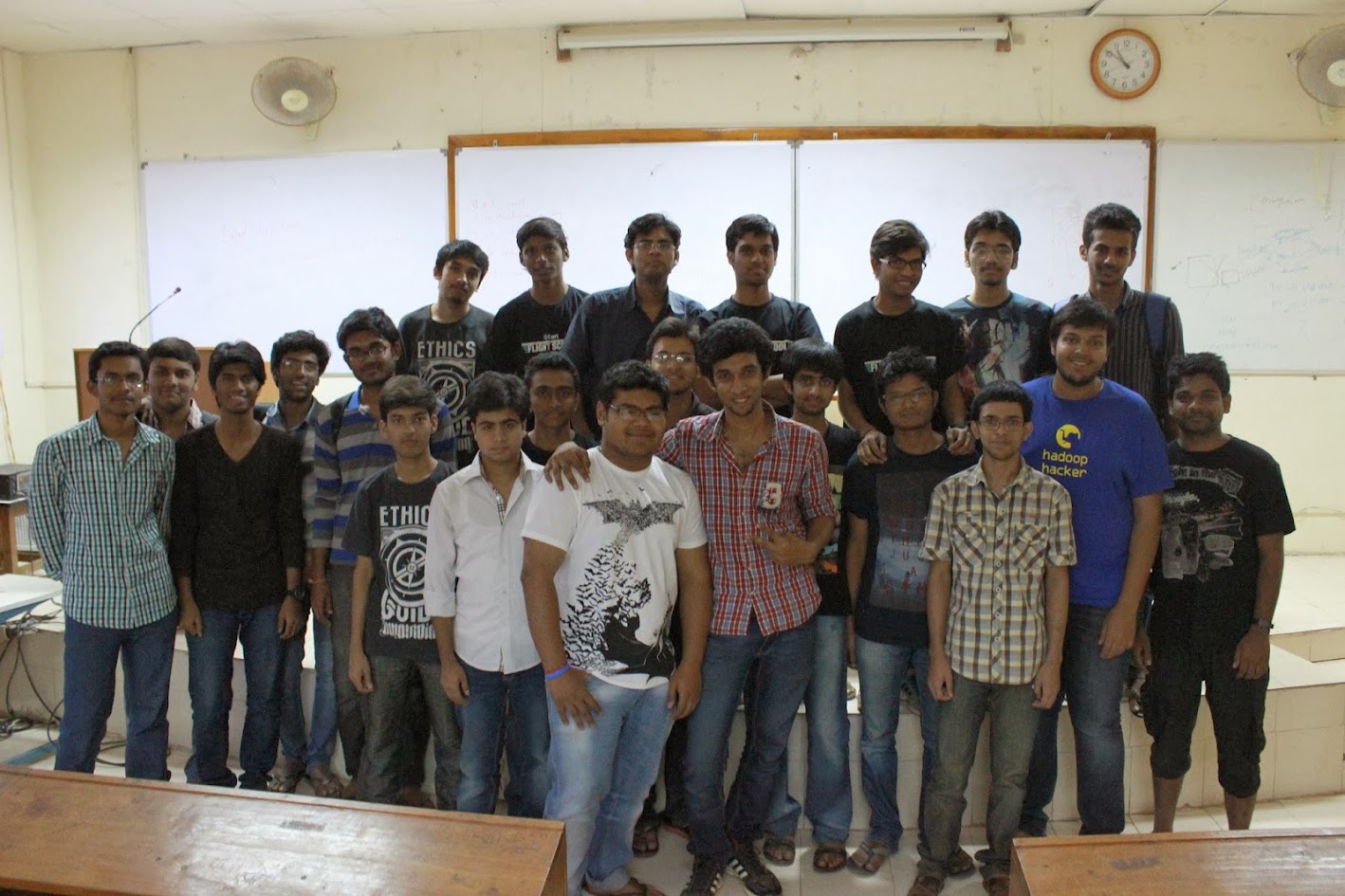
The Google Developers Group - NIT, Warangal held a Google Summer of Code (GSoC) meet-up on 2nd March, 2014. GSoC is an annual program run by Google for university students and provides an opportunity for students to work on real software projects during their summer vacations. Project topics can vary and range from Content Management Systems to Artificial Intelligence, but all are focused on free and open source software.
NIT meetup india.JPG
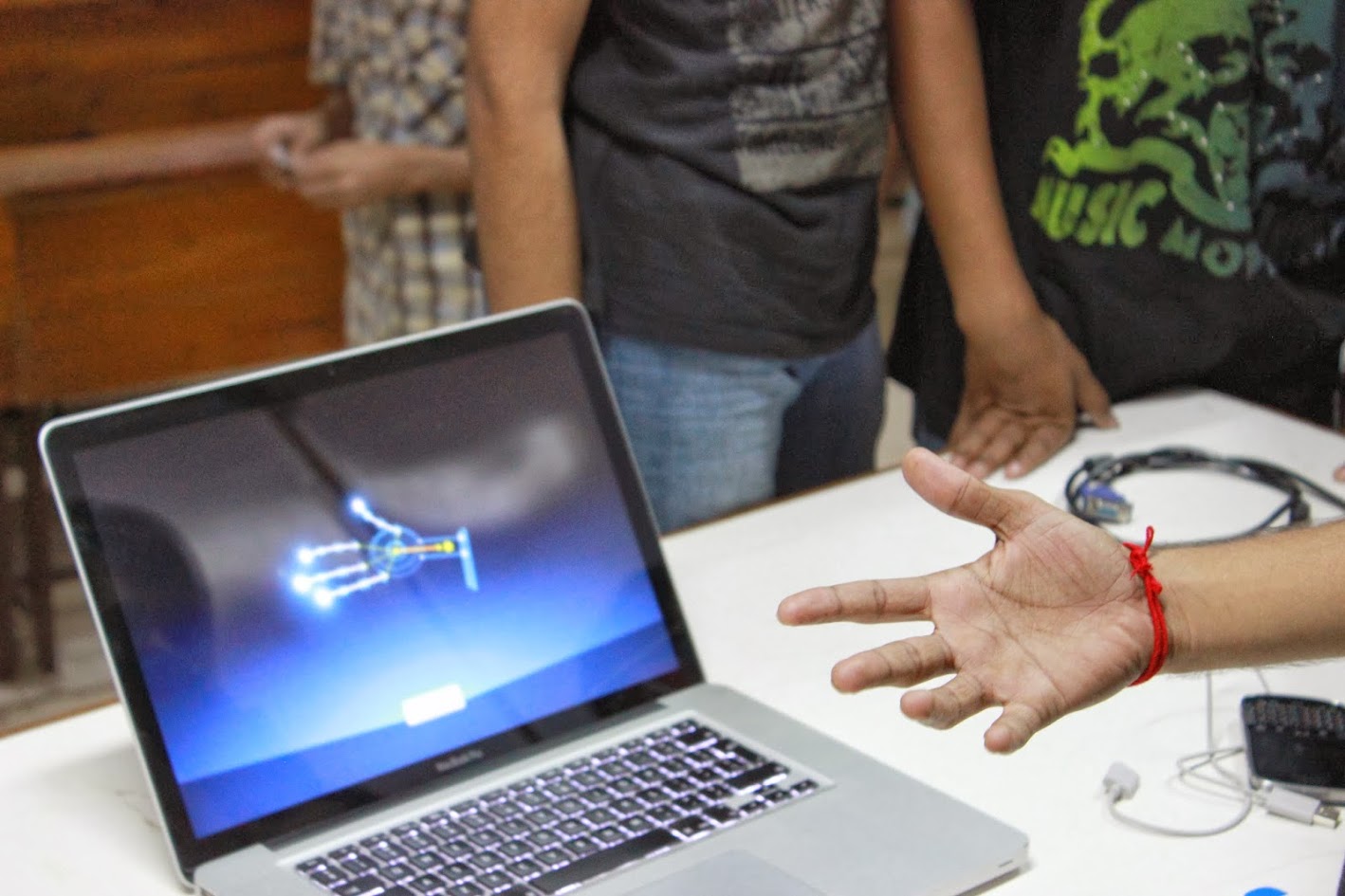
The main agenda for the day was to introduce the students to open source software and give more insight into how things work in these communities. I gave a talk about my experience as a student participant for Tomboy.OSX and GNOME Calculator. The talk covered many aspects of GSoC and clarified any questions students had about the program. After my presentation, we brought in a Leap Motion Controller for the event to show the students some of the latest developments in technology.
leap motion.JPG
The last part of the meet-up was a hands on session introducing the Git versioning system. We believe knowing a version control system is essential for today's software development and it forms the backbone for supporting any project development — especially those distributed over continents. We felt the best choice to teach was Git, due to its distributed nature and ease of learning. The students were showed the usage of basic commands used in Git, and were encouraged to try them at the event. 

The day came to end with students trying out various apps on Leap Motion Controller and trying out Git. We were excited for a great turnout of students to learn more about free and open source software and of course, GSoC!

By Rashid Khan, Google Summer of Code Student, 2013

Google Summer of Code meets Hungary!

Wednesday, April 9, 2014

Today we have a guest post from a former Google Summer of Code student, Dániel Géhberger, who is eager to spread the word about GSoC to his fellow Hungarians! The student application period for GSoC 2014 is now closed, but we are happy to report that there were 6,313 proposals by 4,420 students this year.  Accepted students will be announced on April 21, 2014.

In 2013, 17 Hungarian students (including myself) participated in Google Summer of Code. Although this is a decent number, I was certain there were many more talented people around these parts who could participate in the 2014 program. I decided to hold an informational session at the Budapest University of Technology and Economics to inform more students about the program.

The members of the Department of Telecommunications and Media Informatics helped me to officially organize the event. We decided to hold the event in February on the same date as when the 190 Mentoring Organizations were announced so that the students could dive into different project ideas right away. We created a flyer and sent out many invitations to various student mailing lists.
The day of the event arrived quickly and we were hoping there would be lots of interest. We were pleasantly surprised that the room was completely full five minutes before the official start of the meetup.  We eventually had to move into a larger room as students kept arriving.  We ended up with over 90 students at the meetup! 

We began the event with a general introduction of the program, covering the basic rules, dates, number of participating organizations, etc. The second part was dedicated to short talks about the personal experiences of past GSoC students. We strived to show that GSoC can suit a variety of students. We had one BSc student and two former MSc students speak — their projects ranged from embedded development Linux based systems and games, to an HTTP 2.0 implementation in JavaScript.

During the talks, we tried to emphasize some critical points for new students including choosing realistic projects, proposal writing, and most importantly, how crucial early communication with the organizations is. We also pointed out that participating students can make new connections which, in the long run, can be much more important than the money.
All in all the event was quite successful, and I strongly hope that we will see a huge rise in the number of Hungarian students in 2014. The Google Summer of Code program has opened endless opportunities for me— I hope it can do the same for others!

The slides (in Hungarian) are available on the webpage of the event, and if you are a Hungarian student, feel free to join our mailing list.

I would like to thank everyone who attended or helped to organize the event and special thanks to our speakers: Gábor Molnár (Mozilla), Péter Bozsó (ScummVM) and László Boros (The Fedora Project).

By Dániel Géhberger, GSoC student in 2012, 2013 and mentor in 2014 at The Wiselib

GSoC meetup at ETH Zürich

Wednesday, January 29, 2014

As we start the 10th year of Google Summer of Code in 2014, GSoC supporters from around the world have been hosting meetups to encourage even more students to apply for the program this March. Below, we have a student from last year’s program discussing a recent meetup he and other interested students organized in Zurich, Switzerland.

Being part of Google Summer of Code 2013 was an amazing experience. As a new masters student at ETH Zürich, I decided that it would be a good idea to spread the word about the upcoming Google Summer of Code, and motivate more students to take part in 2014.

I began by looking for past GSoC students and mentors who are located in Switzerland. It was a lengthy process, but we were able to gather up a few people into a Google group. It was exciting to find that many people were also eager to share their experiences, as well as meet fellow GSoC alumni. Veronica even offered to come over for the event from Neuchâtel, almost on the other side of Switzerland!

Thanks to Sabina and some random but fortunate chain of connections, we were able to get the interest of Wolf and Iurii of Google Zurich, who offered to speak about their experiences (and also bring over GSoC stickers and pens). It really is great to have the Engineering HQ of Google EMEA next door!

Soon, a room was booked, a flyer was designed (with over 700 given out), emails were sent out, our event was registered into the official ETH calendar, and the Google Slides were starting to take shape from the collaboration of everyone from gsoc-ch.

The day of the talk quickly came and we were anxious to see the result of our work. The projector was working fine, the second slide faded in gracefully, and all the speakers were present. Things couldn’t be better.

The session kicked off with a brief introduction to Google Summer of Code. Many students did not know much about GSoC and were interested to find out that projects ranged across many areas of study.

After the brief talk, we moved on to presenting personal projects and experiences. It was interesting to hear the varied takes on GSoC, and about what a mentor’s life is like. From stories of how the first $500 kept a student fed as well as unfortunate disappearances, the talk quickly became a very amusing and vibrant exchange between the speakers and students.
The Speakers: Seon-Wook, Wolf, Veronica, lurii, Jasper, Imran, and Sabina (left to right)

By the end of the hour and half long event, it seemed like many students had been sold on the benefits of GSoC. We gathered around to take a group photo, and dispersed knowing that we had done something good and worthwhile.

The next day brought feedback from my peers who had attended the talk. They had been won over, and were seriously considering an application to Google Summer of Code 2014. It is great to know that our efforts were not wasted!

The Google Group for GSoC alumni and prospective students in Switzerland lives on. Do stop by if you have questions, or would just like to say hello!

By Seon-Wook Park, GSoC 2013 M-Lab student

GSoC Meetup in Coimbatore, India

Friday, January 17, 2014

In celebration of the 10th year of Google Summer of Code in 2014, many former students, mentors, and open source enthusiasts have been hosting GSoC meetups around the globe to introduce new students to the program.  Below we have a guest post from Sarup Banskota, 2013 GSoC student with Fedora.

Some of us geeks here at Amrita University, Coimbatore, India run the tech{know}logy club and we're always trying to inspire college students to be creative and develop new ideas and implement those ideas.

We value FOSS principles throughout, and just when a tech{know}logy primer on FOSS techniques was in the pipeline, Google announced the Google Summer of Code program for 2014. We've had two past GSoC'ers, Yeswanth with the Python Software Foundation in 2011, and myself, Sarup Banskota, with the Fedora Project in 2013. Encouraged by excitement from the students, we decided to host a meetup.

The agenda was clear -- introduce students to the FOSS community and encourage them to participate in GSoC and the Gnome OPW program. With support from the CS department here at Amrita, we managed to book a hall, get loads of flyers printed, and generate interest in the classrooms.

On event day, we had about 60 students and a professor attend. There were people new to programming and there were others who had some idea about FOSS but wanted help getting started. We started off with the GSoC slide deck, stopping in between to discuss past projects and answering questions. I demonstrated GlitterGallery, the GitHub for designers I built over the summer.

To give the event an open source feel, we set up an IRC channel, mailing lists and a GitHub repo. I gave a primer on Git (which was gamified and received a lot of interest) and for part of the lesson we collaboratively built a fun project together! There were people sending in pull requests and asking questions on IRC. It was a very exciting half hour, after which we took a break and distributed some Google swag.

It was a fantastic Saturday on 9th November, and we hope a lot of the attendees will venture out to open source communities of their choice and contribute! I already had a couple of contributors come by and commit to GlitterGallery, and I hear a few others have started contributing to Gnome and Mozilla.

I'd really like to thank everyone who turned up, and my friends Aravind, Archit, Madhu, Manjush and Romil for being awesome geeks and helping out during the event. Special thanks to Kriti for the publicity and for covering the event on her blog.

By Sarup Banskota, Google Summer of Code 2013 Fedora Project student

University of Toronto GSoC 10 Things meetup

Friday, December 20, 2013

This week we have a guest post from Google Summer of Code mentor, Amar Takhar, discussing our recent Google Summer of Code "10 things" meetup in Toronto.

Since 2005, Google Summer of Code has been creating millions of lines of open source code for the world to use. To celebrate the 10th year of the program in 2014,  members of Google's Open Source Programs office are traveling the globe visiting countries with high participation rates over the past 9 years of the program.

I was lucky enough to attend one of these events on November 8th in Toronto, Ontario, Canada at the University of Toronto. I'm all for community involvement (especially in my home country!) and it’s very exciting to see Google showing this type of interest. The event was open to anyone interested in learning more about GSoC, Google Code-in and Google’s involvement in the open source community. There was a strong showing with over 60 attendees, including students and mentors from previous years of GSoC as well as students new to the program.

Speakers & Projects
Google Open Source Programs Office team members, Stephanie Taylor and Mary Radomile, spoke about the programs and their success and what the team has planned for the future.

The event also featured eight lightning talks (3-5 minute presentations) given by mentors and former students from the Toronto area who discussed their projects and personal experience with GSoC. They included:
Oh, Canada!
I was amazed to learn Canada has had 869 mentors and 347 students since the program’s inception in 2005. The University of Toronto has had 58 students participate in GSoC making it the #7 school overall in participation!

Wrapup
The event concluded with a reception - dinner, chatting and of course, tons of Google swag. There were several developers and past attendees of the GSoC Mentor summit in attendance who were able to field questions from eager students. I had a long chat with one of these students who had cursory knowledge of GSoC. He came away from the event excited and eager to participate next year. Based on all the ideas that were passed around and new connections made, I would say the event was a resounding success!
Photo by Zoe Song

I’d like to encourage not only GSoC participants to attend future events that Google holds, but also students who are interested in learning more about the program and Google’s contribution to the Open Source community.

Participating in Google Summer of Code and Google Code-in has been an adventure I look forward to each year.  I think it would be fantastic to have an annual GSoC meetup here in Toronto where we could help spread the word. I'm already looking forward to the 10th year and all the new developers I will meet!

By Amar Takhar, Buildbot, NTP, RTEMS Mentor

Google Summer of Code Meetup in Sarajevo

Monday, December 2, 2013

By announcing the Google Summer of Code 2014 program early this year (about 3.5 months earlier than previous years), many students, mentors and open source enthusiasts have been busy organizing meetups across the globe to celebrate the 10th year of the program coming up in 2014. We will continue to post about these global meetups over the coming months.

This week we have a guest post from a former Google Summer of Code student who organized a meetup in his home country of Bosnia and Herzegovina. Enjoy.
For some time now I thought it was time for Bosnia and Herzegovina to have a Google Summer of Code meetup. In the past 9 years of GSoC, Bosnia had 4 different students doing 5 projects. A few times I thought about organizing the meetup but I was not sure if anybody would come to listen to what I have to say, and I finally decided to take this project on myself and was excited to see the results.
The meetup
After successfully completing the Google Summer of Code program as a student twice (in 2012 and 2013), I now had a lot of insight into the program and people had more reason to be interested in my talk. 
Though the logistics weren't terribly difficult to arrange, I needed a room (I reserved the conference amphitheater at the International University of Sarajevo where I am a student), a laptop and a projector. We held the meetup on November 12 with a group of 20 students in attendance, including five from the Faculty of Electrical Engineering - University of Sarajevo, and three IUS professors.  
We kicked things off with GSoC slides and an overview of the program, including info about projects from previous years, open source/free software in general and a few tips and tricks. I wrapped up with some of my personal experiences in the program. Probably the most important thing that happened at the meetup was to alleviate some of the fear around applying for Google Summer of Code. It took me two years to get it together and gather the nerve to send my first email to a mentoring organization, so I tried to explain to the people at the meetup that they should not be afraid, "If I could do it, why can't you?" 
Based on the number of questions and the quality of the discussion after the presentation, it was clear that the main goal of the meetup was achieved: drive interest in the program. A number of students that came to the meetup plan on applying for GSoC, and though this is still a relatively small number, it's the beginning of what will hopefully be strong participation from Bosnia and Herzegovina students. I look forward to organizing at least one more meetup in the future.
Admir Huric, thank you for your help with this story. 
By Benjamin Talic, Google Summer of Code 2012 and 2013 student 
For more information on the 10th year of Google Summer of Code visit our program site where you can find the timeline and FAQs.

By Stephanie Taylor, Open Source Programs


.